
?Political Translation in the Age of Artificial Intelligence: Can Machines Be Biased
Yemenat
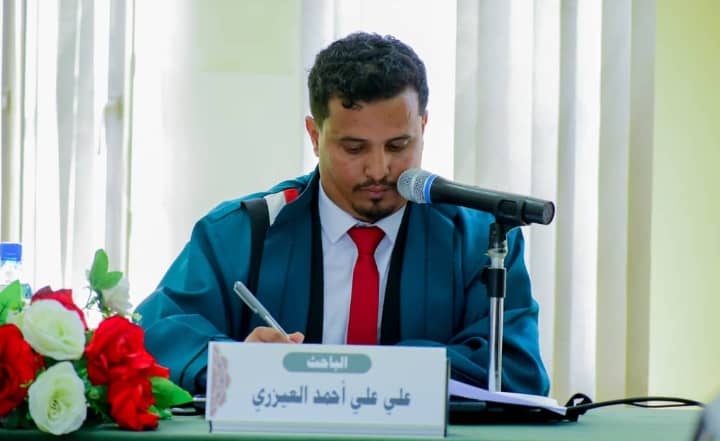
Ali Ali Al-Aizari
Assistant Lecturer, Department of English, Faculty of Arts and Humanities, Sana’a University, Yemen, and PhD Candidate in Translation and Artificial Intelligence
In the digital era, political translation has emerged as a powerful force in crafting narratives, conveying ideological discourse, and shaping collective perceptions across borders. With the rapid evolution of artificial intelligence and the growing prominence of machine translation tools like Google Translate, DeepL, ChatGPT, Deepseek, Gemini, etc. reliance on automated systems has reached unprecedented levels. Yet this progress invites a pressing question: Are these machines neutral agents? Or can artificial intelligence, by nature or design, be biased when translating politically charged content?
The Invisibility of Bias: Can Machines Be Truly Objective?
While AI systems are often perceived as impartial, they learn from vast datasets created by humans, datasets that inherently carry cultural, political, and ideological assumptions. This means machine outputs reflect the biases, blind spots, and power dynamics embedded in the original content. Consider the phrase “المقاومة الفلسطينية” (“Palestinian Resistance”). Some AI translation systems render it as “Palestinian Resistance,” capturing its nationalistic connotation, while others convert it to “Palestinian Terrorism,” a drastically different framing that invokes international criminality and strips the term of its sociopolitical context. Likewise, the word “شهيد” (martyr) is often translated as “the deceased” or simply “killed,” diminishing its deeply held cultural, spiritual, and ideological significance.
Real-World Cases of Linguistic Distortion by Human Translators and Adopted by AI Systems:
Biased translations are not merely theoretical. In 2021, when Turkish President Recep Tayyip Erdoğan spoke on the Palestinian cause, his statement “القدس خط أحمر بالنسبة لنا” (“Jerusalem is a red line for us”) was mistranslated in international media as “Jerusalem is important to us” a softened version that diluted the strength and urgency of Turkey’s stance.
The phrase”العملايات الاستشهادية”, “Martyrdom Operations” offers another clear illustration. Often used in certain cultural contexts to signify sacrifice, it is commonly rendered in Western media as “Suicide Bombings,” a term that repositions the act within a narrative of violence and fanaticism. Depending on the translator’s cultural or ideological lens, the action is reframed as either resistance or terrorism a pivotal distinction in shaping global perception.
Political translation becomes especially fraught in contexts of ongoing conflict. Take the term “جدار الفصل العنصري” (“Apartheid Wall”), commonly used by Palestinians to describe the Israeli separation barrier. Israeli narratives often refer to the same structure as a “Security Barrier.” The former phrase evokes racial segregation and moral indictment; the latter emphasizes protection and pragmatism. Thus, translation doesn’t merely carry meaning, it crafts political reality.
The Arabic term “انتفاضة” (Intifada) faces a spectrum of translations: “uprising” highlights popular resistance, “revolt” implies rebellion, while “violent riots” reduces it to disorder. Each label carries ideological weight, affecting how audiences interpret the legitimacy and nature of collective action.
Historical memory is also subject to semantic reshaping. “النكبة” (Nakba), denoting the 1948 forced displacement of Palestinians, is sometimes diluted in translation to “The 1948 Palestinian Exodus,” reframing a catastrophic event into a seemingly voluntary or inevitable migration. Similarly, “حق العودة” (“Right of Return”) a legal and moral cornerstone of Palestinian discourse, is occasionally rendered as a “Request” or “Demand,” minimizing its legitimacy and eroding its rhetorical force on the international stage.
Even seemingly straightforward terms like “المستوطنات” (“Settlements”) are at risk of distortion. When translated as “Neighborhoods,” the term sheds its colonial, legal, and political implications, offering a sanitized narrative of urban development. Meanwhile, “التطهير العرقي” (“Ethnic Cleansing”) has at times been softened to “Displacement,” a term that downplays the systemic nature and severity of the crime.
Beyond Language: The Ethics of Translation in the AI Age
The abovementioned examples underscore a broader truth: AI does not invent meanings in isolation. It inherits and amplifies the linguistic and ideological biases embedded in its training data. Political language is inherently fraught, context-bound, and often contentious, realities that machines, without guidance, are ill-equipped to navigate on their own.
The challenge, then, is not to discard machine translation, but to calibrate it. The way forward lies in a hybrid model where human translators, steeped in linguistic nuance and cultural literacy, collaborate with AI to ensure translations are not only technically correct but also ethically informed and contextually accurate.
In brief, in an age increasingly defined by algorithms and automation, political translation remains an area where human insight is indispensable. Artificial intelligence is not immune to bias, especially when engaged with polarizing issues like the Israeli-Palestinian conflict or the Russia-Ukraine war. To prevent AI from becoming an unwitting agent of distortion, we must pair the precision of machines with the conscience of humanity. Only then can translation serve as a true bridge between cultures, rather than a battleground for competing narratives.